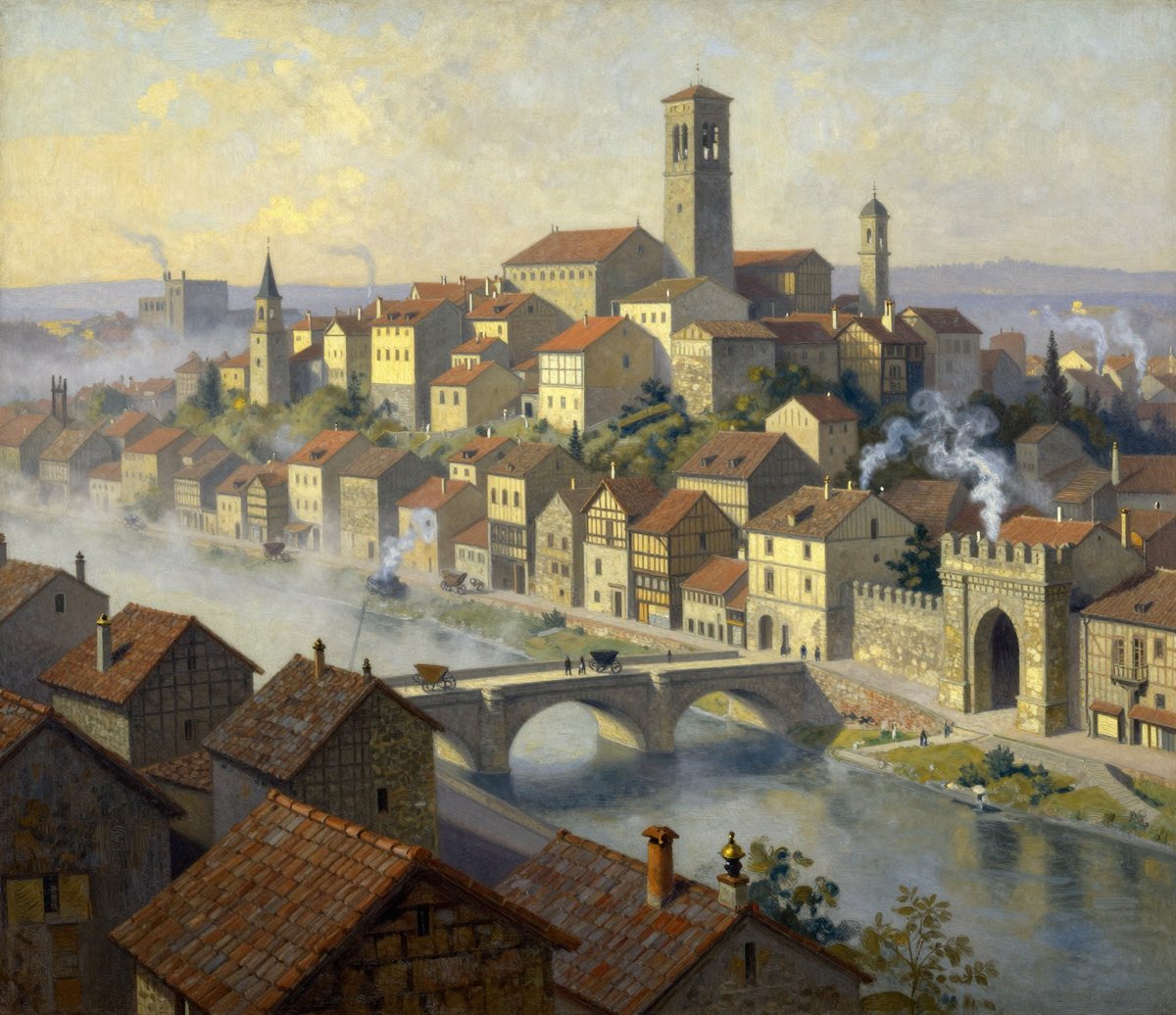
Rivensol at the start of the day, seen from above the roofs: the river, the bridge already carrying carts, the gate standing open, and the towers of the city above the mist. Anything anyone knows here has to be carried up one of those streets by somebody.
Standing line
Rivensol and the world of the Knowledge — a Renaissance city of guilds, oaths and presses, where magic is knowledge held in the mind, and knowing has a price.
The place, physically
A walled city climbing a hill, with the money at the top and the river at the bottom. On the hill: the guild halls, stone and gilt, where knowledge sits behind sworn oaths and a ledger is carried chained to the wrist. Along the river: the Warrens, where the fever-streets run over in the wet months and a pair of good hands is worth more than all the gold on the hill. Between them, the printers' quarter — half-timbered workshops leaning over cobbled lanes, hand-carts of paper bales and ink barrels, freshly pulled sheets pegged on twine to dry across the alley mouths. In a shop like a dozen others stands a press of black iron and dark oak, taller than a man and twice as old, bought from a monastery and worked by candlelight. The city runs on flame after dark: candle, lamp and hearth, woodsmoke standing over the tiled roofs, and the river going grey out past the wall toward the harbour and the open water.
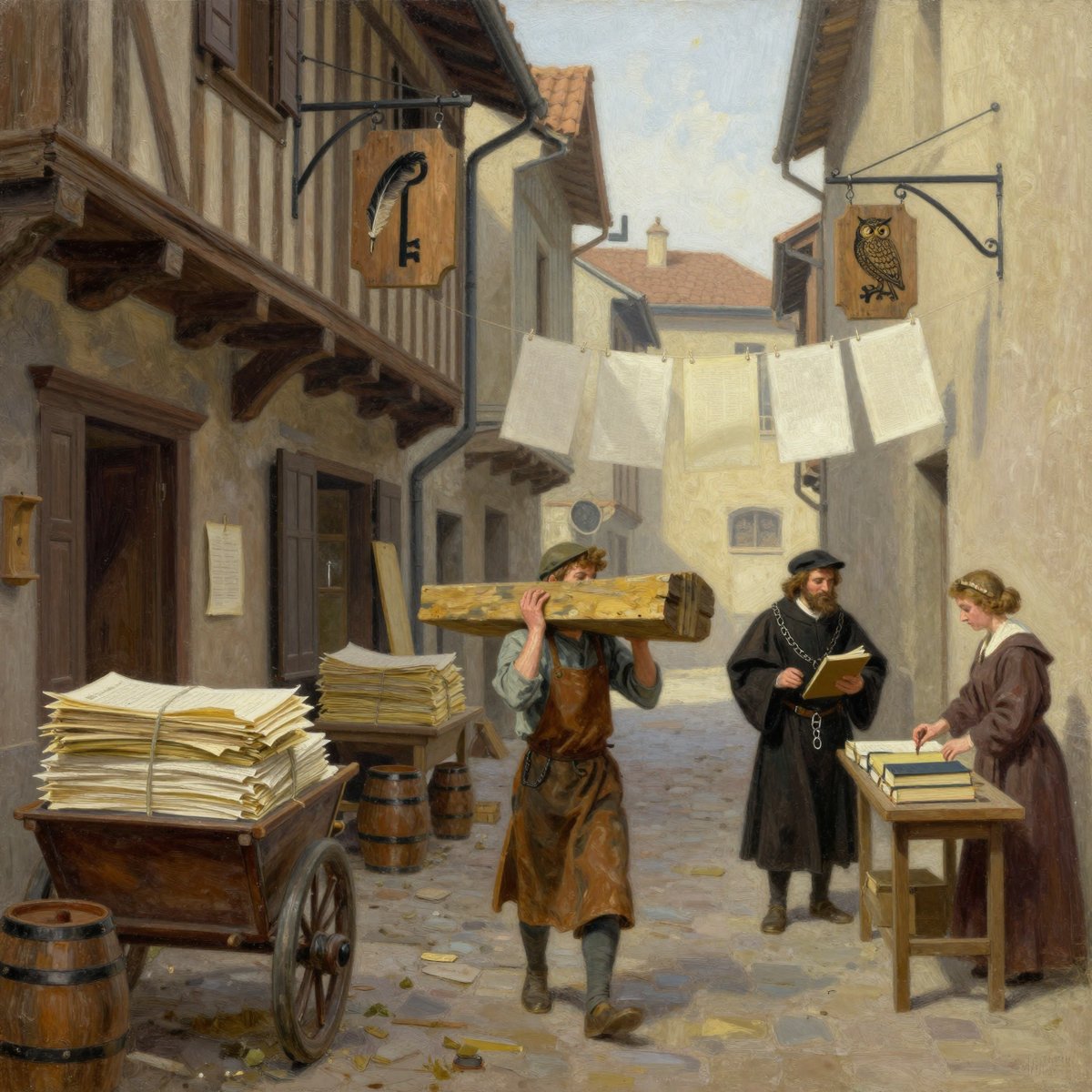
The printers' quarter. The sheets drying overhead are worth more than the buildings they hang between, and everyone in the lane knows it.
The time
There is no year to give you: this world keeps its own calendar. Call it the world's Gutenberg moment. For as long as anyone can prove, magic lived where all knowledge lived — in trained, expensive, sworn memory — and the people who owned that memory owned everything else. Then the press. The Thirty-Seventh Impression is the revolution itself: one apprentice's lifetime, from a single hidden press to a war over who may know things. The Bindery opens about twenty years after, among the first generation raised print-native, for whom that revolution is a chapter in their textbooks and its aftermath is the room they live in. The Benefactor stands a little apart and deliberately undated, out on the world's grey edge. So: one long moment, told across a generation — the page arriving, and the world learning what it costs.
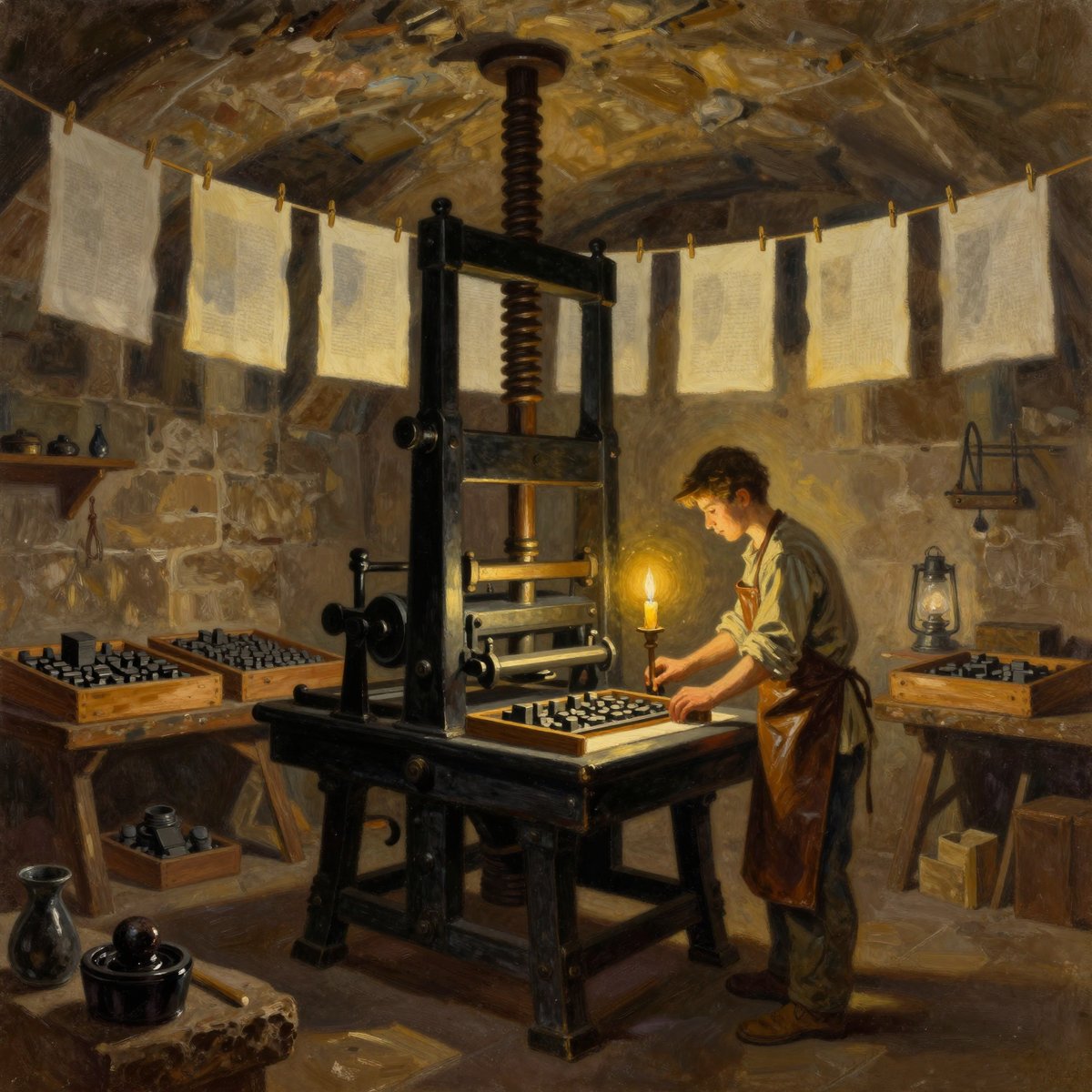
A press like this one printed prayer books and guild charters for sixteen years. What it prints next is the whole argument of the series.
Daily life
An apprentice's day starts with lye-water and ends by candlelight — scrubbing ink out of floorboards, rotating damp sheets on the drying rack, checking the impression on the bottom row where the press pressure fades. In the market square a crier stands on a barrow with a satchel of printed sheets and a dozen hands reaching up: news, prayers, and — since everything changed — pages that work. In a print-native kitchen, dinner can come off a penny pamphlet, and a household heals and builds from printed pages that cost pennies where a sworn guildsman once cost a year's wage. Down in the Warrens the free surgery takes no money, and the queue forms under the dripping eaves before it opens. And through all of it move the grey-coated librarians of the Order of the Index, checking what is on the page, and burning the wrong ones.
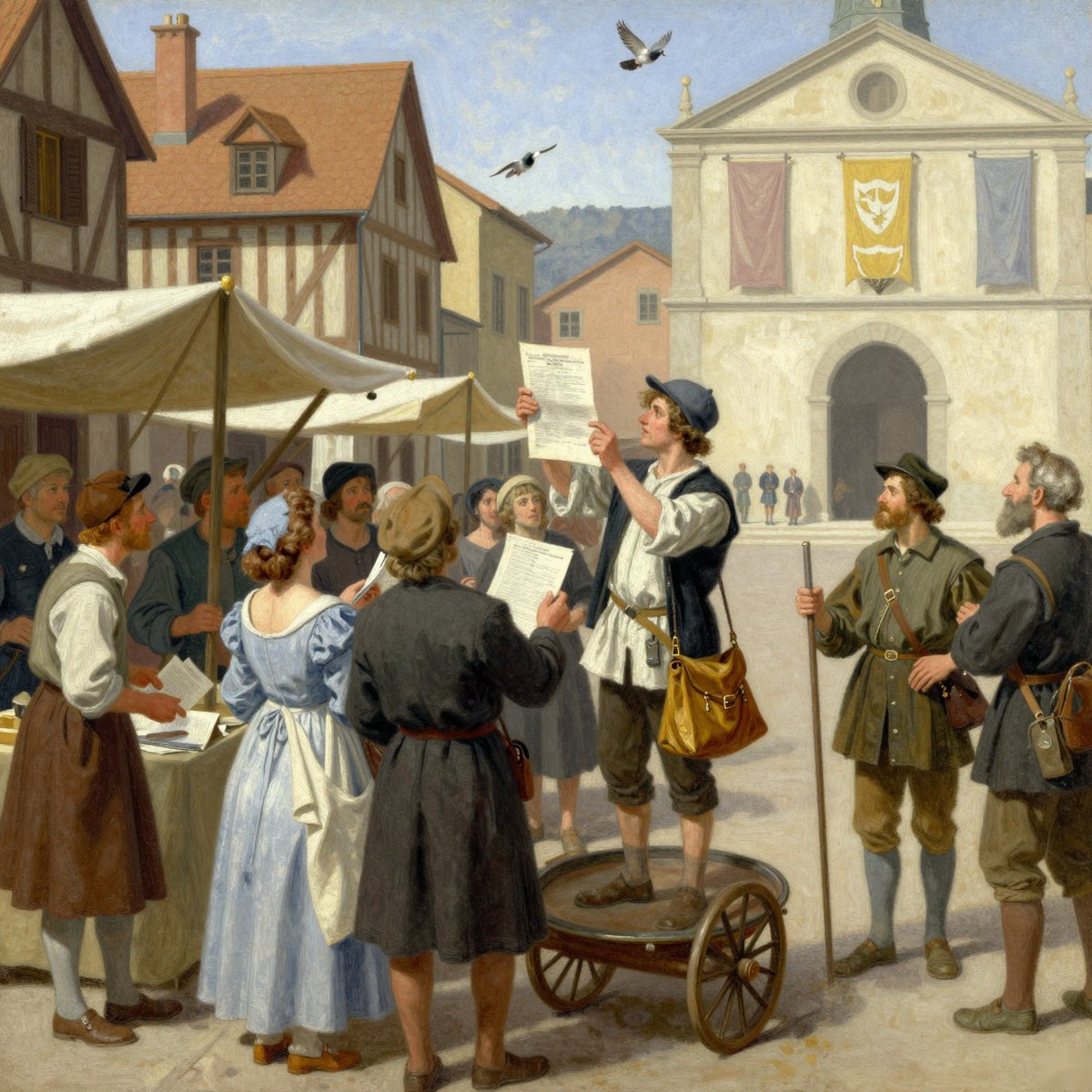
What a revolution actually looks like: paper, going hand to hand, faster than it can be burned.
The rules
Magic here is nothing more than knowledge, held in the mind. Anyone who can learn a rune can work it — no bloodlines, no chosen ones. But holding knowledge that way costs you yourself, memory by memory: hold a little, carefully, and you pay a little; hold too much and you are hollowed into something that no longer knows what it has lost. There is one escape from that price — the written page. A spell read from a book costs the reader almost nothing. Which is why books are power; why the guilds and the great houses ration who may read; why an oath is a lock and a library is an armoury; and why the Order of the Index burns the wrong books. Then a printing press changes what a book is — and the question stops being who owns the magic, and becomes whether magic can be owned at all.
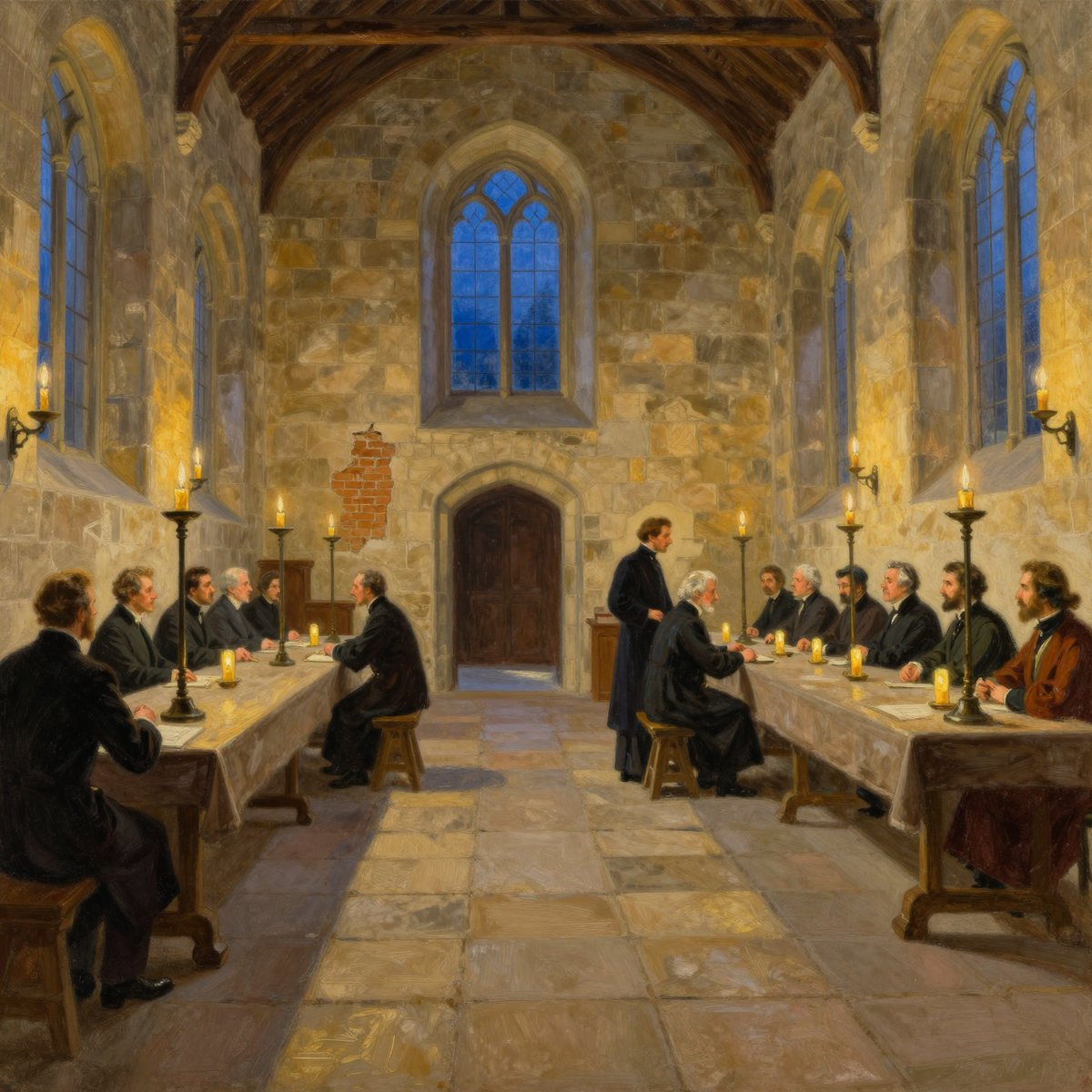
The hall was a refectory before the Disaster; the serving-cart groove is still worn into the flagstones. Twenty years on, nobody in this room says the word for what was lost.
The map
On the hill - The guild halls — stone, gilt, and sworn oaths; where knowledge is rationed and the rationing is called order. - The monitors' Academy — the new order's police-school, holding its ceremonies in a hall that was a refectory before the Disaster. - The dead academy beneath it — fled in a panic, never emptied: diaries still open on the desks, and nobody left who knows what is down there. - House Vael's holdings — an old-blood house in decline, living on the memory of what it used to be able to do.
Down the hill - The printers' quarter — paper bales, ink barrels, and pulled sheets drying on twine across the alley mouths. - The Weber print shop — a family press under new and unfriendlier management, where the first book begins. - The hidden workshop in the tunnels — a press underground, doing by lamplight what the guilds hang men for. - The Beast Kin Quarter — the district the city built to keep at arm's length, and can't do without. - The Warrens — the low riverside streets: fever, washing-lines, and the free surgery that takes no money.
Beyond the wall - The harbour and the grey water — schooners, salt wind, and the long flat horizon one narrator writes from. - The island — bought as a sanctuary by a benefactor, far enough out that leaving needs his boat. - The empire's roads — the cities beyond Rivensol, which the printed page reaches one by one. - The Federation capital — where the later books argue about what comes after a revolution wins.
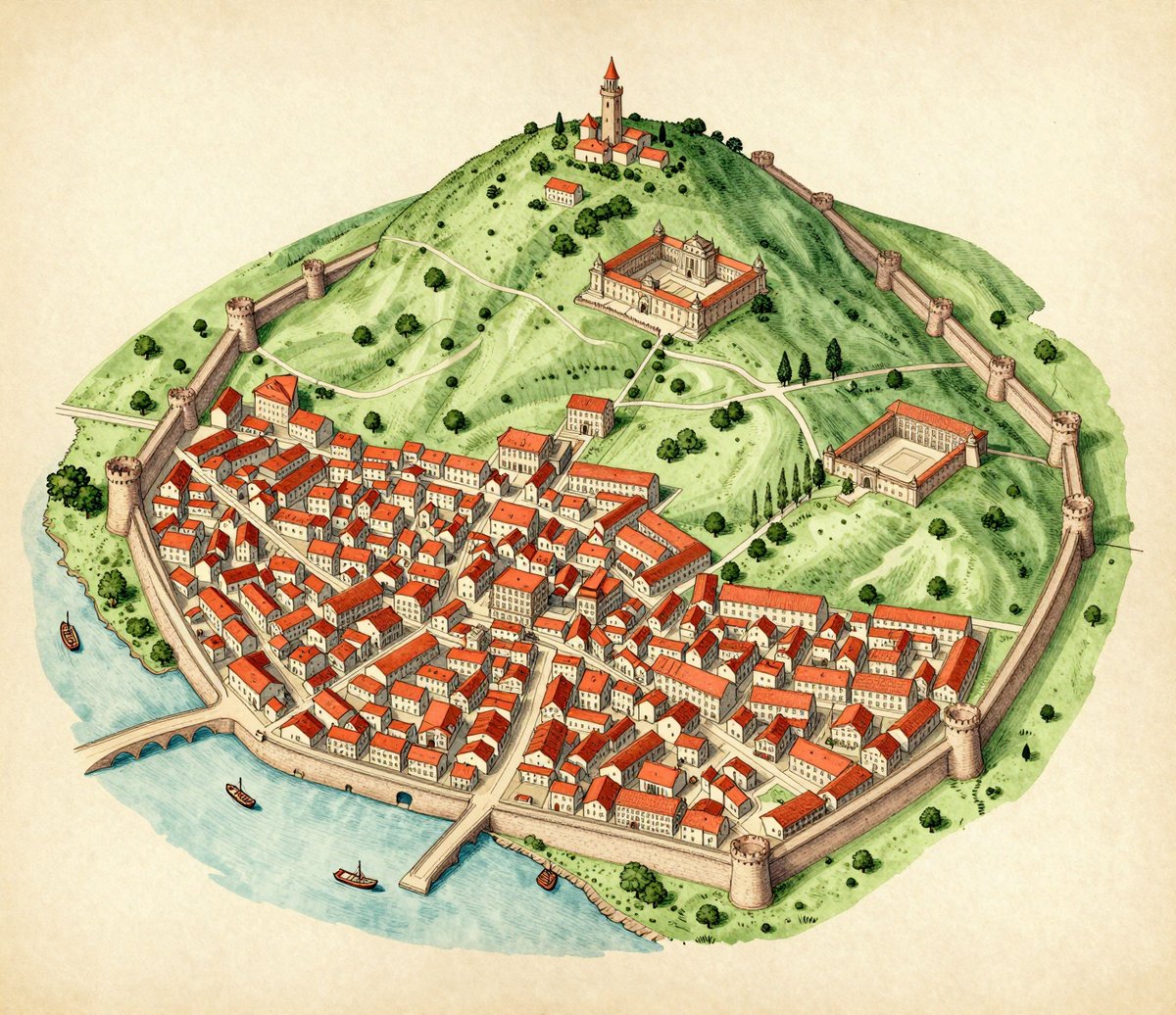
Rivensol whole: the roofs packed tight down by the water where the presses and the print alleys are, the wall around all of it, and the guild halls and the Academy up on the hill where the knowing is kept. The city is a ladder, and every book here is somebody climbing it or being kept off it.
Who you keep meeting
Two novel series a generation apart, and one book standing alone at the edge — separate stories in one world. (No cast-roster sheets exist yet for this universe; these names will get their own sheets in a later phase.)
- Kellen Weber — an indentured printer's apprentice in his father's stolen shop, who pulls one over-inked page too many and finds it humming under his fingers.
- Master Aldric — the oath-bound Guild printer who taught him, and who knows exactly which rules he is helping to break.
- Sophie Dubois — her father was murdered for researching the same printed magic; she is Kellen's sharpest ally, and the political mind of the pair.
- Hans — Kellen's childhood brother in everything but blood, first through every door.
- Corin Vael — twenty years later: the discarded bastard of House Vael, worn as the monitors' reconciliation exhibit in a borrowed coat, better at reading a room than anyone in it.
- Elke Vonk — a print-native fellow trainee, brilliant, and carrying more of her house's business than she was ever asked about.
- The Benefactor — a free surgeon, violinist and philanthropist of the Warrens, narrating his life's great work of charity; the reader learns to read past him.
- Sister Bekket — his broad-handed nursing sister, who in eleven years has never once said a comforting untrue thing.
- The grey librarians of the Order of the Index — the book-burners. They move through both series; watch for the grey coats.
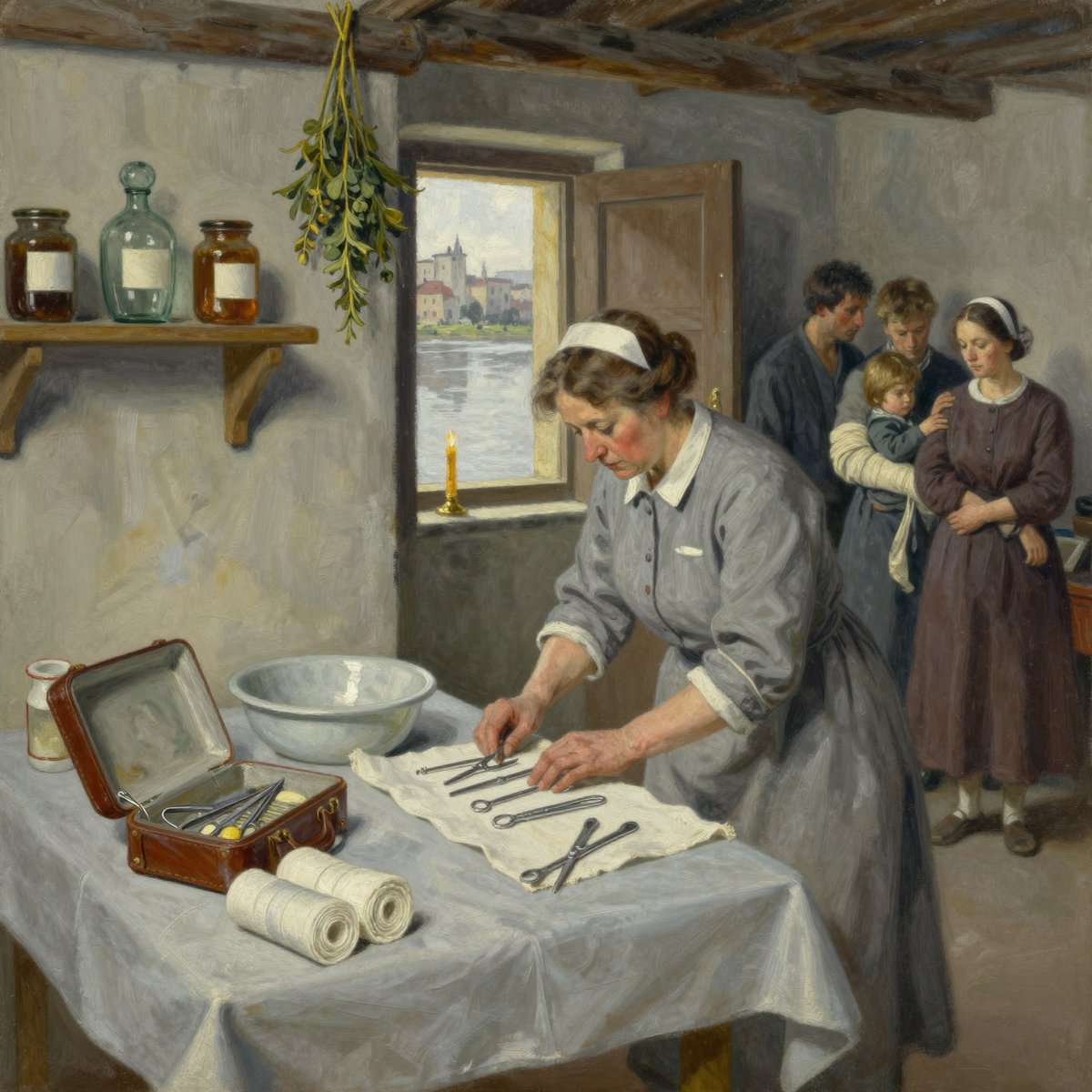
The free surgery in the Warrens. The instruments are laid out in the order they will be wanted, by a woman who has never once said a comforting untrue thing.
What this world promises
Literary fantasy where the wonder costs something. Close first-person voices, moral weight, endings won rather than given. These are not cozy books: there is war in them, and loss, and people you will mind losing. The horror, where it comes, is moral, never gore. And the magic stays seductive — you will want it, price and all.
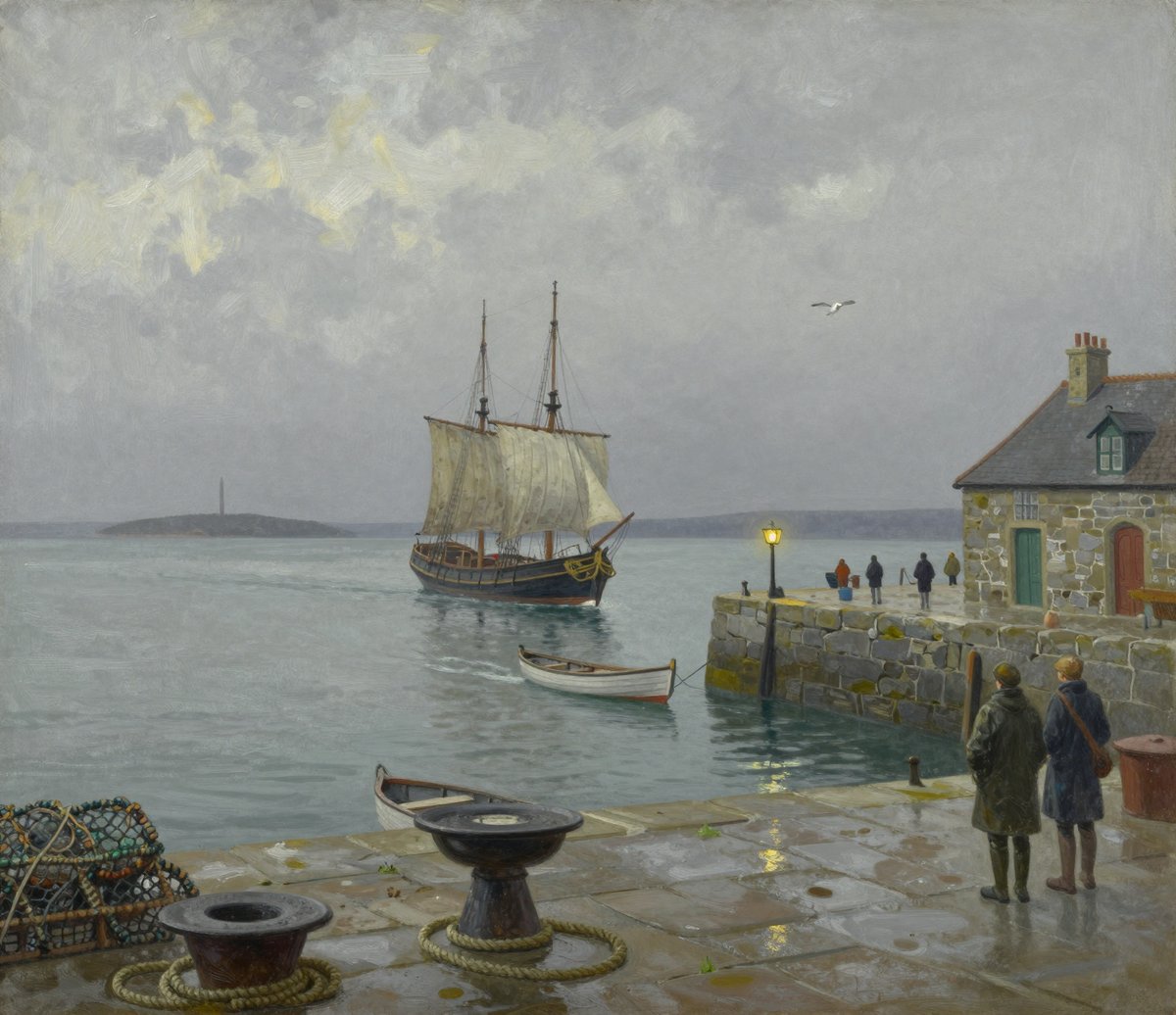
The grey water at the story's edge. One of these books is narrated from a schooner out there, by a man serenely certain he has never been kinder.
Where to start
- The short way in — The Benefactor, in four novella-length parts: a beloved surgeon serenely narrates his life's great work of charity, and you slowly see past him. It touches none of the main story and spoils nothing — read it first, last, or on its own.
- The main door — The Apprentice, book one of The Thirty-Seventh Impression. One apprentice, one hidden press, and the start of everything. If you read one book to find out whether this world is for you, read that one.
- The long way — the two novel series in world order: The Thirty-Seventh Impression, books one to eight, then The Bindery, which opens a generation later among the people who grew up inside what Kellen's revolution made.