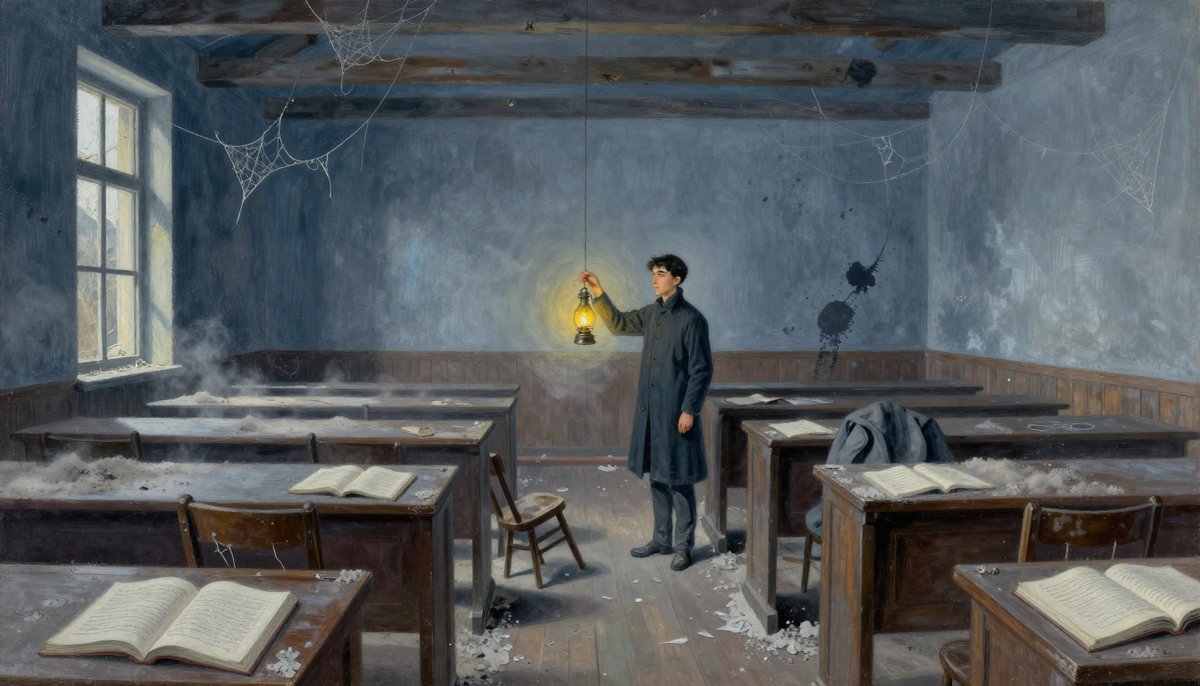
A lecture room fled in one afternoon twenty years ago and never entered since: journals still open on the desks, plaster down on the boards, cobwebs across the chair backs. He is here on an errand for the family that threw him away.
The patch
Twenty years after the press won. Print did what it promised: cooks replicate a dinner off a penny pamphlet, families heal and build with printed workings, and the world is hugely better off. It also compounded, once, into a disaster nobody had a brake for, and these books open in the scar tissue — provisional institutions, and everybody's authority newer than their grievances.
There are three ways to pay for power here. Old memory magic costs you yourself, up front, which is why only the declining families still train it. Printed magic costs nothing up front and quietly, permanently widens you — makes you more bindable, invisibly, cumulatively, whether you are careful or not. And binding is the lost art that turns that openness into ownership. Everyone knows not to overuse. Nobody knows about the other thing.
The set
- The dead academy — fled rather than closed — each family grabbed its own people and bolted, leaving diaries open on desks and half-finished experiments behind department doors. Nobody knows exactly what is down there. They have hints, not an index.
- The monitors' Academy — the repurposed halls above: the new state's police-school, under-resourced, distrusted, and staffed by exactly the print-generation it polices. Authority without legitimacy.
- The deep warrens — the unexplored lower levels, left as ruin and storage. Teachers are watched and observers escorted, which is why students make the ideal infiltrators — students are expected to wander.
- The sealed lab — the founders' last paranoid act: a door warded the old way, so that only an un-exposed old-blood hand can open it. Every faction wants what is behind it.
- The districts of the disposable — where the old families' failed experiments leak into the population as fraying cases, and where monitor casework actually happens.
- House Vael's holdings — a declining old-blood house living on the memory of what it used to be able to do, and on the usefulness of a son it threw away.
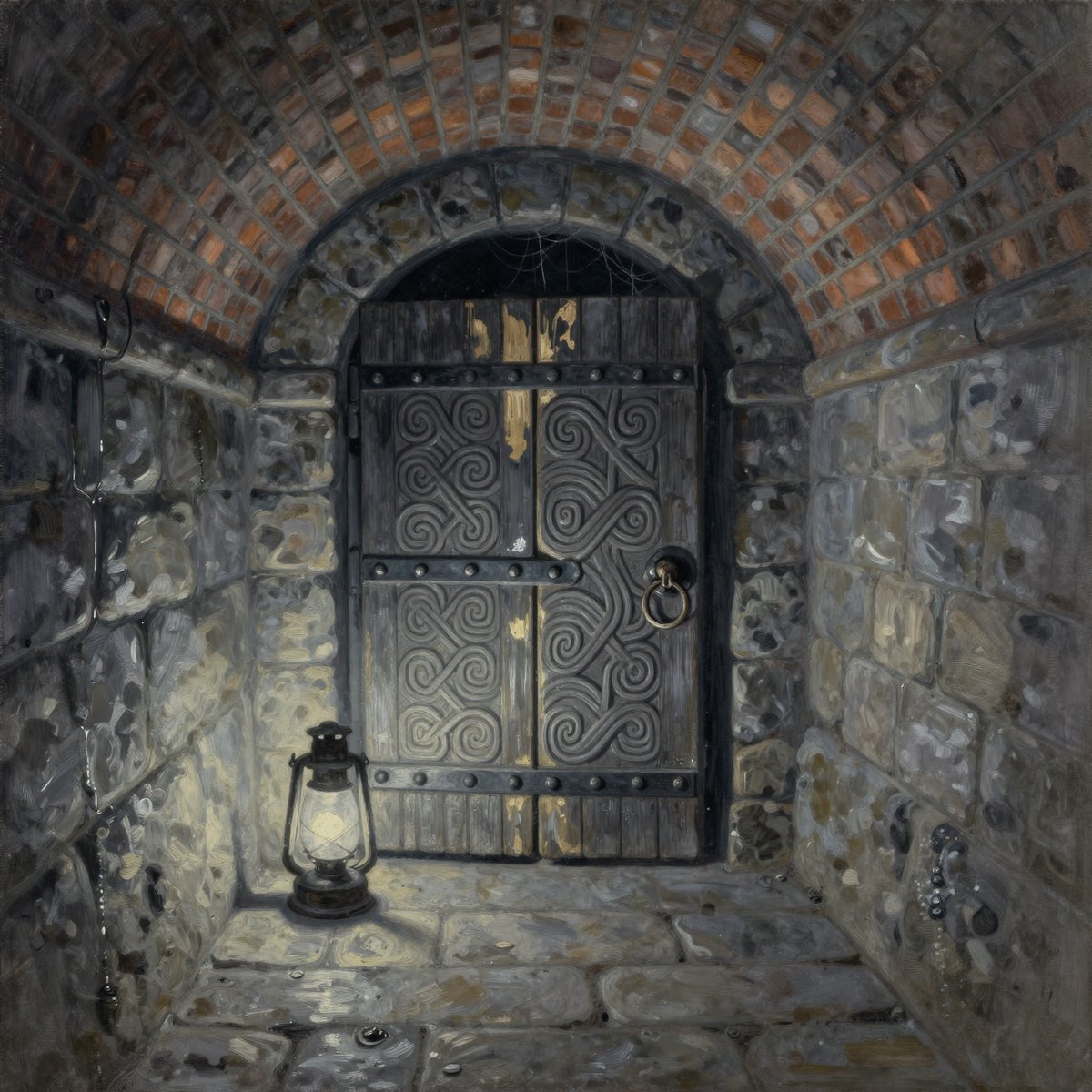
The founders' last paranoid act, at the end of a passage nobody has a reason to walk down. It opens to one kind of hand and no other, and every faction in the city wants what is behind it.
The cast
Told in one voice, Corin's, and he misreads himself out loud for eight books. In brief:
- Corin Vael — twenty-two, narrow and under-grown, black hair, the sallow Vael colouring and the family's heavy straight brow — the one inheritance nobody could take back. He can feel how open a person is. He thinks it means he can sense power. He wants to be an ordinary monitor, which is the one thing he can never be.
- Elke Vonk — a fellow trainee, small and square-shouldered, ash-fair, printer's ink in both hands. Placed at the Academy by a rival old house and owned by them before she ever met him. She is running her own case against them anyway.
- Bram — his casework partner and the one person who gives him somewhere to belong — big and soft-heavy, sandy-red, freckled to the knuckles, a nose broken young and set badly. They are saving for a provincial posting together.
- Joris Kessel — the family's agent: fifties, comfortably thickening, a lesser branch's signet worn turned inward. He made peace with being owned decades ago and he genuinely likes Corin. Not a villain in disguise — the future being offered. You can have a place, if you accept what it costs.
- Halbrecht — the decent Academy authority — sixties, tall and dry and desk-stooped, spectacles mended at the hinge with wire because the Academy pays badly and he has never mentioned it. Sincere, not corrupt. Blind.
- Machteld Vael — the Dowager. Seventies, spare and vertical, no concession anywhere in her, and Corin's own heavy brow worn like a title. An offer from her is not a transaction. It is a homecoming.
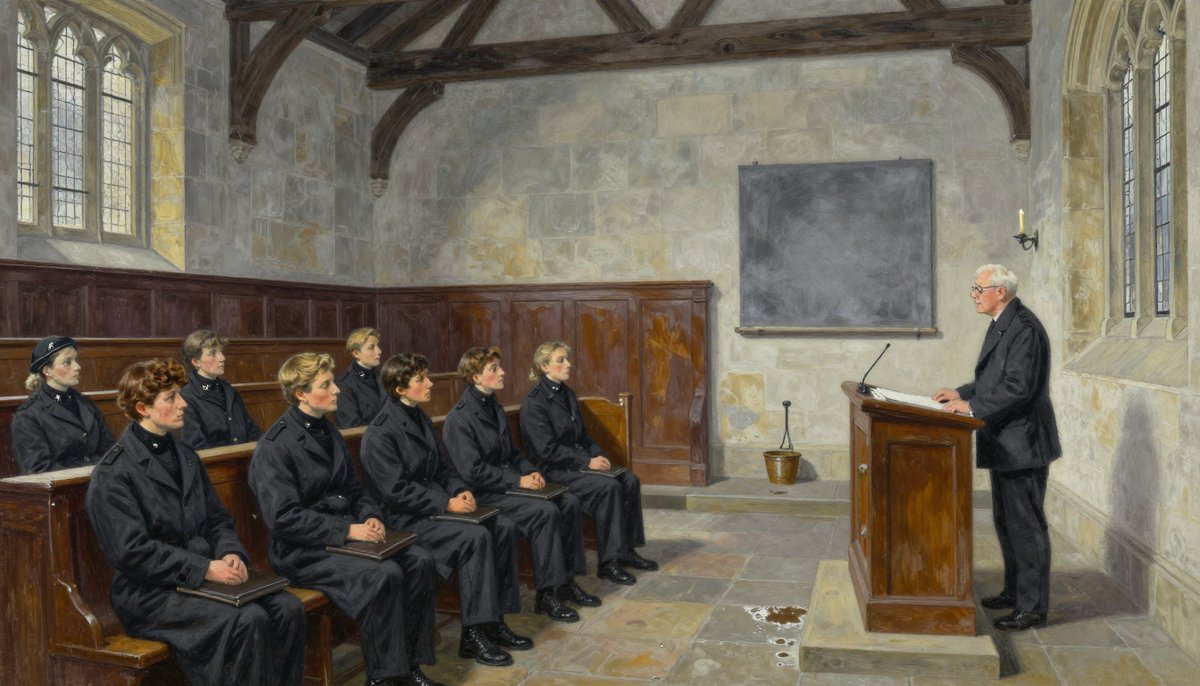
A police school in a borrowed stone hall, with a pail under the damp and a lecturer who has never mentioned that the Academy pays badly. Halbrecht is entirely sincere, and entirely wrong, and that is the hardest thing in these books.
The rhythm
A literary slow burn that becomes a concealment thriller. He learns what he is at the end of book two — privately, by accident, with nobody watching — and from there he has to hide it from his family, his Academy and the woman he loves while continuing to fetch for the family, because refusing would expose him. The reader is ahead of him by design, and that is the dread.
Six rungs down, each a choice rather than an accident, and the descent is into monstrous capability rather than ambition. The harm is institutional and moral, never kinetic. No absolution at the end: the order that gets founded is founded by the survivors, and its rules are protections against him.
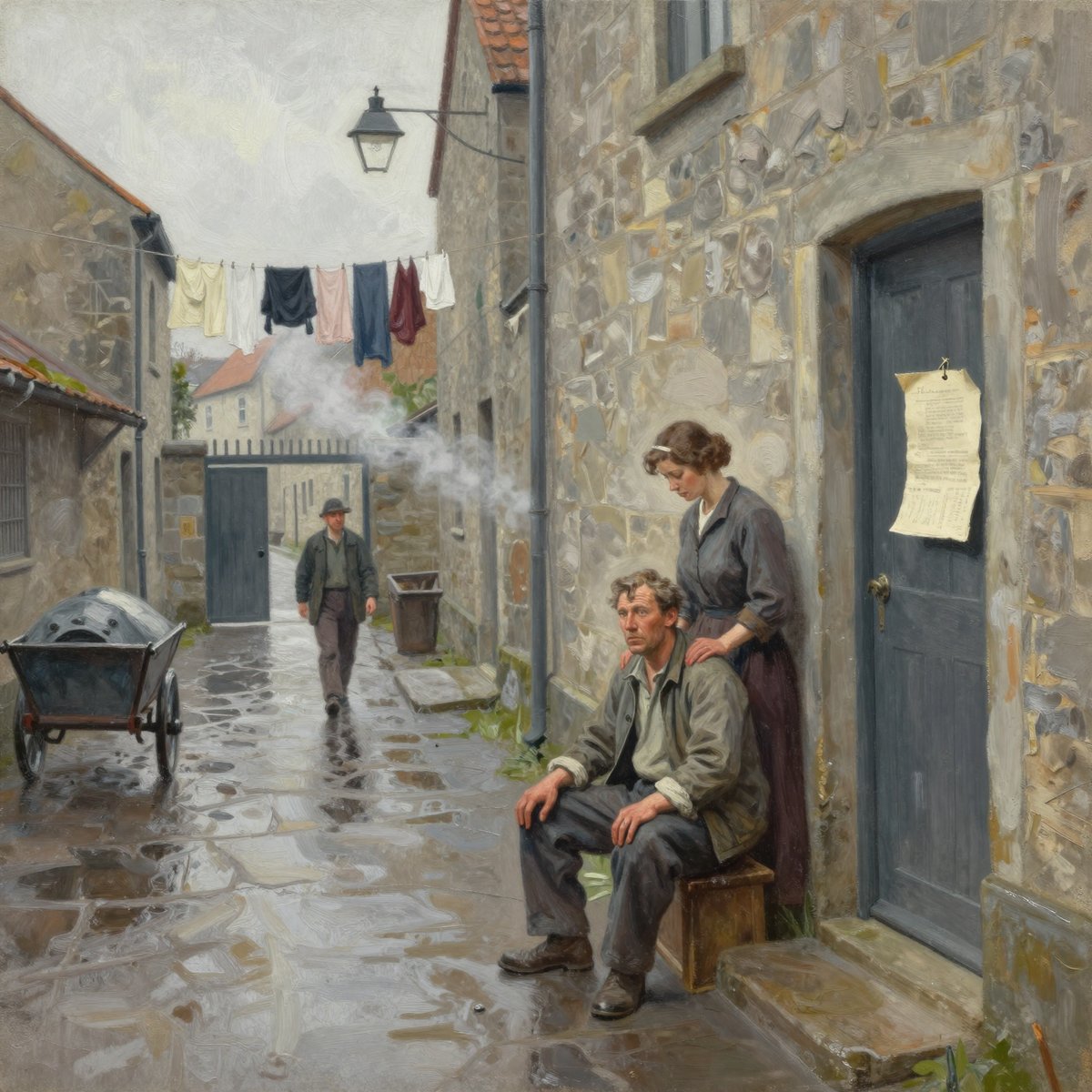
Fraying does not kill anybody. It empties them, and leaves them sitting on a step in the afternoon while the lane goes past without stopping, because by now this is ordinary.
The question the series asks
What do you do when you are the thing your world was right to be afraid of?
Where to start
One continuous descent across eight books. Read them in order — the whole engine is that you know before he does, and then that he knows and cannot say.
- The Ward — start here. Asked warmly by his family which of his fellow trainees impresses him, he answers honestly, and names his one true friend.
- The Mercy — stripped of his badge and working among people nobody helps, he watches a dying woman start to fray at four in the morning, and reaches in to lift the cost.
- The Correction — the monitors begin a street-by-street inventory of everyone who could be emptied, and he is one of the clerks writing it. He ruins his pages neatly, and the weeks it buys are paid for in lies.
- The Proximity — he is right about every danger closing on the woman he means to save. Then a device is switched on in a crowded hall, and its light finds him.
- The Appetite — hunted out of his own name, he turns out to be extraordinary at getting people out of rooms they should never have been put in. He finds he enjoys it.
- The Kindness — five hunted people and nowhere left to move them, and then decent men offer him a lawful roof and rules he writes himself. It works, until safety asks him for the one thing his family made an empire of.
- The Persuasion — a binding cannot be undone, only moved, and only a binder can carry it, and only once. He never lies to her. It is still how she was taken.
- The Keeping — a shopkeeper takes his coin off the counter but not out of his hand. No absolution, and a rule he writes himself.
Set twenty years after The Thirty-Seventh Impression and deliberately free of it — that revolution is history and founding myth here, so this is a clean place to start the world.