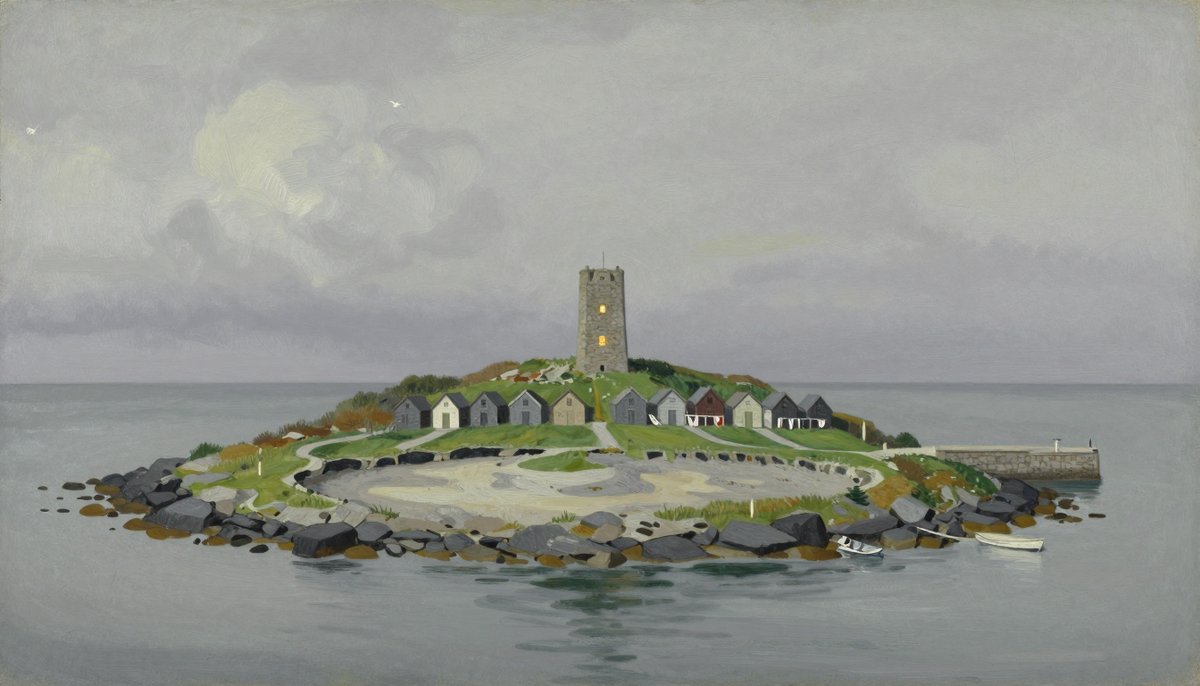
A crater of pale blighted ground, two neat rows of huts with washing out, one tower with a lit window, and a jetty with a boat on it. Everything cared for. Everything orderly. No way off.
The patch
Not Rivensol, and not the revolution. This is the side door into the same world: short tales told from its edges, by people the main history never mentions. The first of them is a memoir in four parts, written at sea, by a surgeon.
He is thirty-nine and his hands have been steady since he was twenty. He runs a free surgery in the poor riverside quarter and takes nothing for it, and the queue under his eaves is longer every year than his two hands can reach. In this world the way to do more is to hold the knowledge in your own mind — and holding it spends the mind that holds it. He decides the arithmetic is worth it. He is, he will tell you, quite certain he has never been kinder.
The set
- The free surgery — a scrubbed table, a leather case of instruments, unlabelled jars, herbs drying from a beam, and a queue of the poor under dripping eaves. The best room in the story, and the last one that is simply good.
- The island — a forgotten place he buys as a sanctuary — a shallow crater of blighted ground his own overuse made barren, which he then rebuilds into rows of tidy huts. Nobody goes hungry. Nobody is beaten. Nobody leaves.
- The central tower — one narrow stone tower with a lit window, where the violin goes all night and the man who plays it believes he is soothing them.
- The schooner — the boat the memoir is written on, running away from what he made toward the next place that needs him.
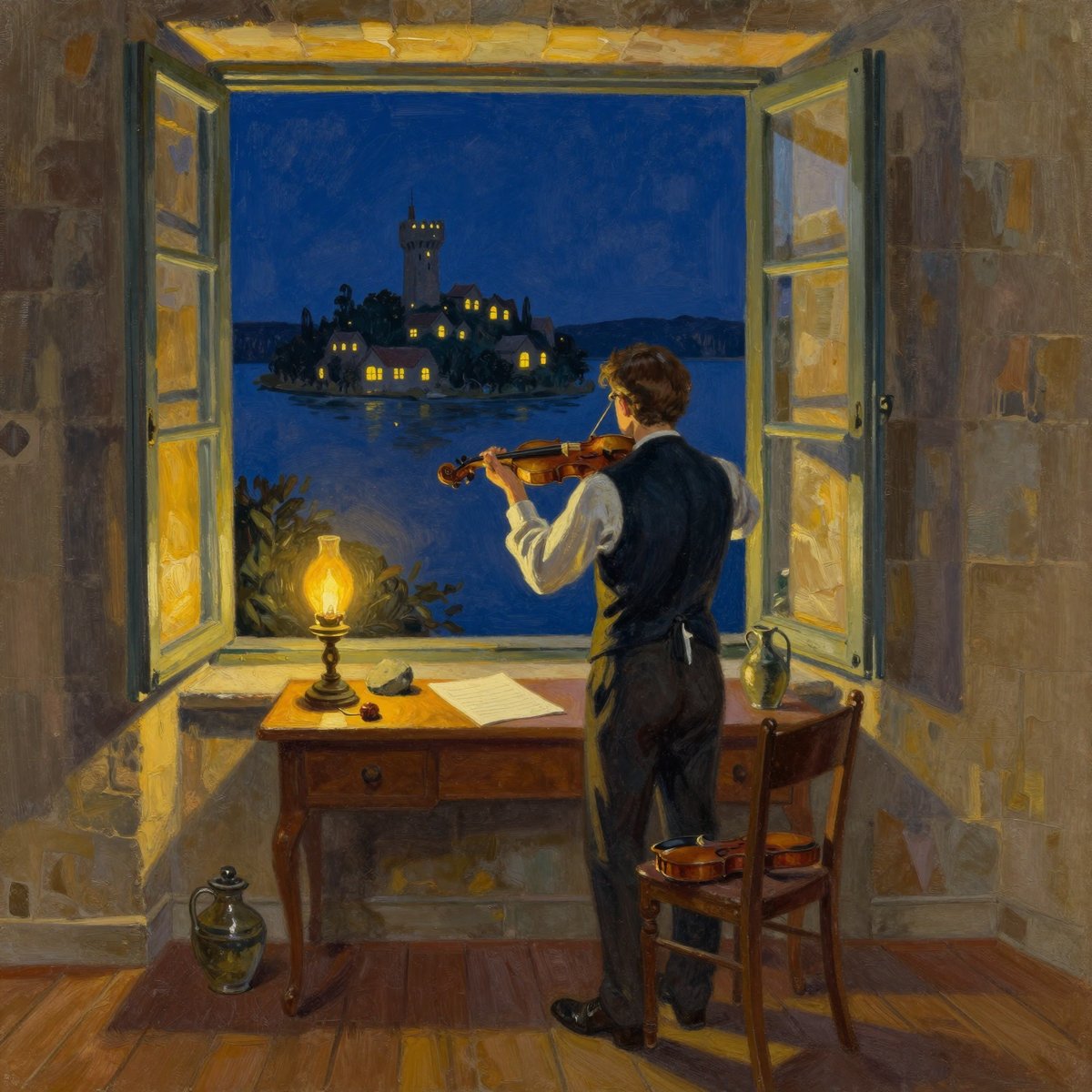
He plays at the window until it gets light, and believes it soothes them. His face is turned away from us in every picture on this sheet, which is the only honest way to draw him.
The cast
Told in one voice, his own, and that is the whole design — you read past him. In brief:
- The Benefactor — surgeon, violinist and philanthropist, and by the end a knowledge-wraith: a man hollowed out by holding too much, who cannot perceive his own erasure and therefore narrates every cruelty as a kindness. He is the disease presenting as the cure.
- Sister Bekket — his lay nurse of eleven years — plain, broad-handed, brown hair under a netted cap, a face that does not change for blood or for money. In eleven years she has never once told him a thing he wished to hear instead of the thing that was so. She is the conscience of the story, and she almost sees it.
- The saved — the poor he rescues onto the island and then cannot let leave, because they are safe here. The reader counts them. He counts them too, and calls it a different number.
- The redeemed — criminals he reframes as protectors, and who are in plain fact the guards. He is proud of them. He is proud of all of it.
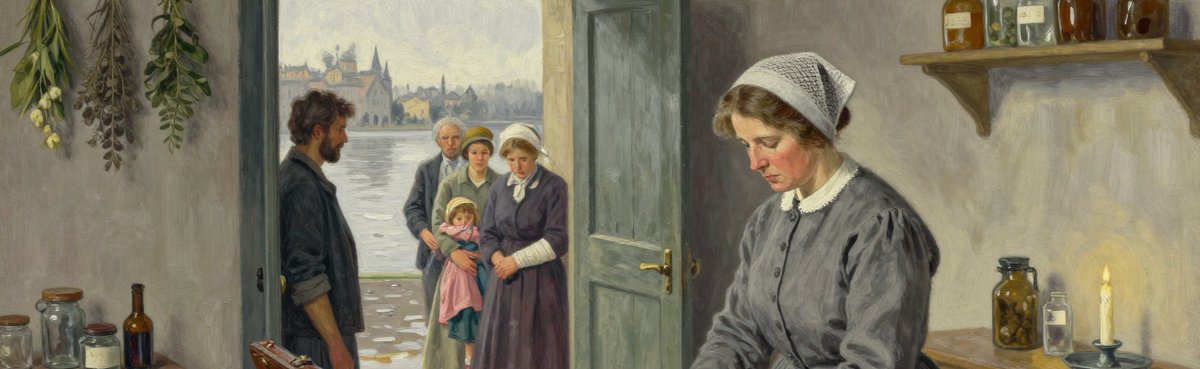
Sister Bekket laying the instruments out in the order they will be wanted, and the queue at the door that is longer every year than two hands can reach. This is the last room in the story that is simply good.
The rhythm
Four parts — The Surgeon, The Island, The Multitude, The Sail — about nine thousand words each, one descent rung apiece. The horror is entirely interior: no gore, no monster in the dark, just a serene and generous voice describing a prison as a haven while the reader works out what is actually on the page.
And he is not punished. He loses the island, chooses the next city, and sails on unpunished and at peace with himself — which is the point, and the hook for whatever the line does next.
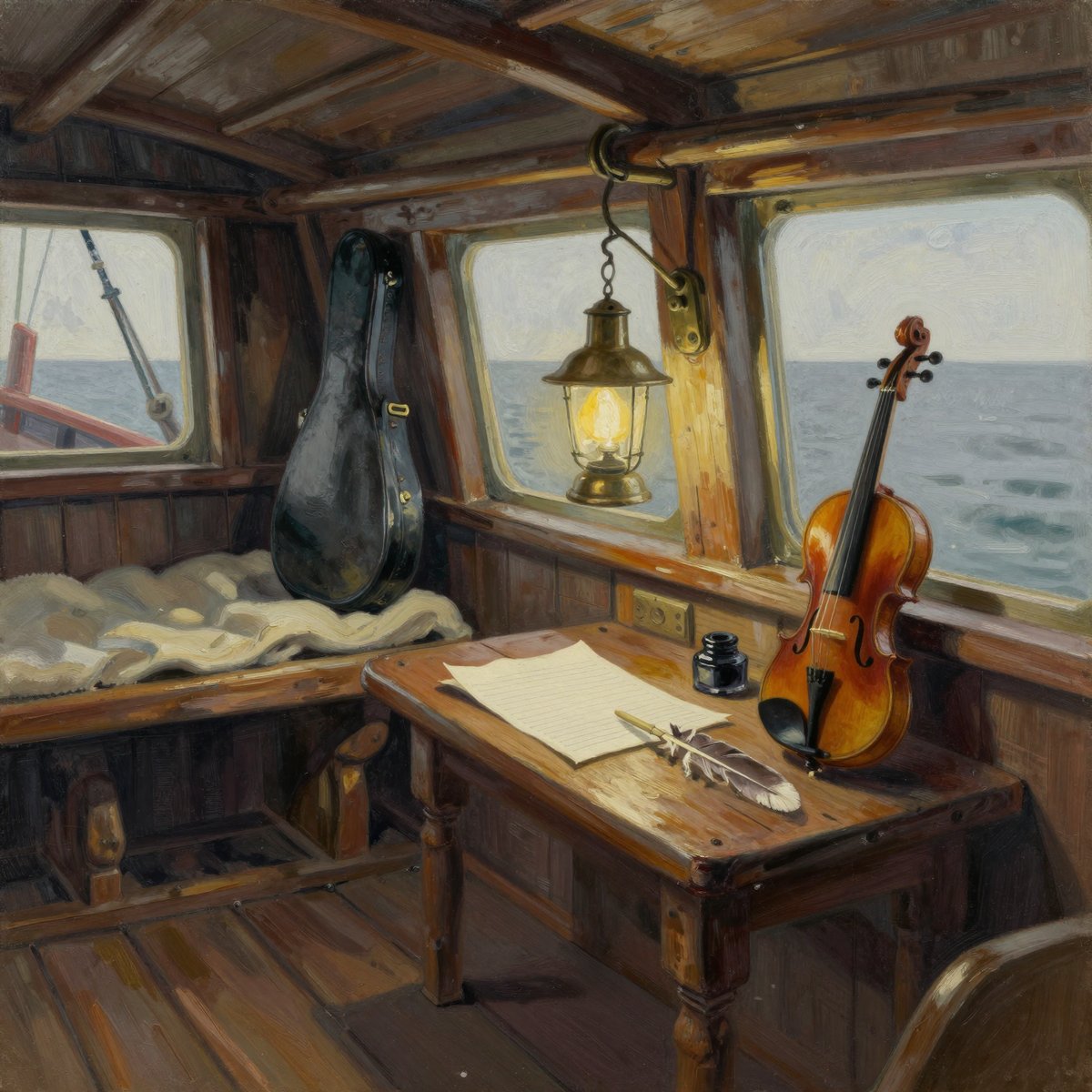
The table the memoir is written on: paper, ink, a cut quill, the violin case on its hook, and a flat empty horizon through the stern window. He is on his way somewhere new.
The question the series asks
What if the kindest man you ever met could not tell what he had become?
How to read it
One story in four parts. Read them in order — each part is a rung, and the drop only works downwards.
- The Surgeon — start here. The free surgery, the crushed arm he refuses to take off, and the arithmetic he does about how many more he could reach if he simply carried more in his head.
- The Island — he finds a place the city forgot and makes it a haven. He locks the gate himself, and sleeps better than he has in years. A patch of grey has come up in the good soil.
- The Multitude — none turned away. The broken arrive in everything that floats, and he has learned how to make room. You will hear it before he does.
- The Sail — the island is dying, and he has already chosen the next one.
A mailing-list exclusive, and the short way into this world: peripheral by design, so it spoils nothing in The Thirty-Seventh Impression or The Bindery. The line is extensible — the schooner has to land somewhere.